We are happy to announce several sessions for #rp12, which will be held in partnership with the Deutsche Welle. Today, we would like to introduce a selection of speakers and themes.
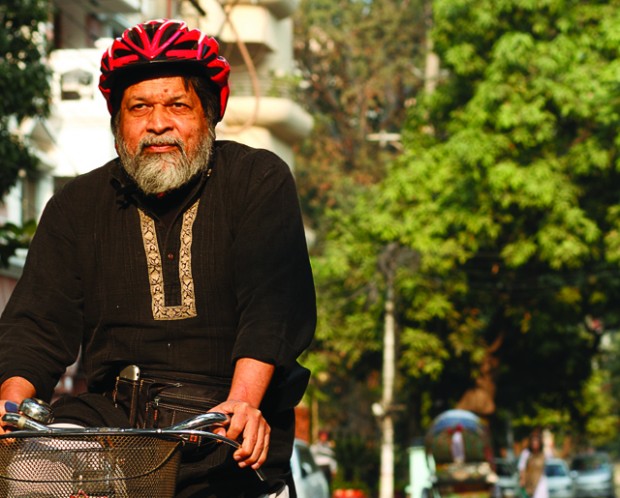
On the edges of our global village, we still find regions where the internet is still barely in its adolescence. What roles do technological developments and the spread of the internet have in shaping the self-image of a society and its standard of education? Shahidul Alam uses Bangladesh as an example to describe the interface of the internet and society.
As a winner of numerous photography awards, Shahidul Alam has made a name for himself on the international stage. In Bangladesh, his home country, he remains a prominent activist: in 1994 he was involved in introducing Bangladesh’s first Email network, founded the country’s first web portal, the first national photography agency, and became the first South Asian to head the World Press Photo’s jury panel.
Currently, he works on projects to strengthen and raise journalistic standards and increasing internet skills in rural regions of Bangladesh. This year, Alam is a member of the Deutsche Welle’s jury for the Blog Awards, The BOBs, which take place in Berlin shortly before #rp12.
Another member of the BOBs jury is Isaac Mao. You can find our previous introduction to Isaac’s work here. At #rp12, he will talk about “Sharism”- an inquiry into the effects of social networks on Chinese society, especially on social structures and individualisation.
Two further panels at #rp12 will focus on the conditions following the Arab Spring, as well as what lessons can be learned from the so-called “Facebook Revolution” and applied to countries such as China, Iran and Russia. How do internet activists work together and what role do they play in the government re-building phase? What do social networks remain weak in China, Iran and Russia? What roles can bloggers and international media institutions play in reform movements in totalitarian states?
More infos on the speakers and panels can be found here.